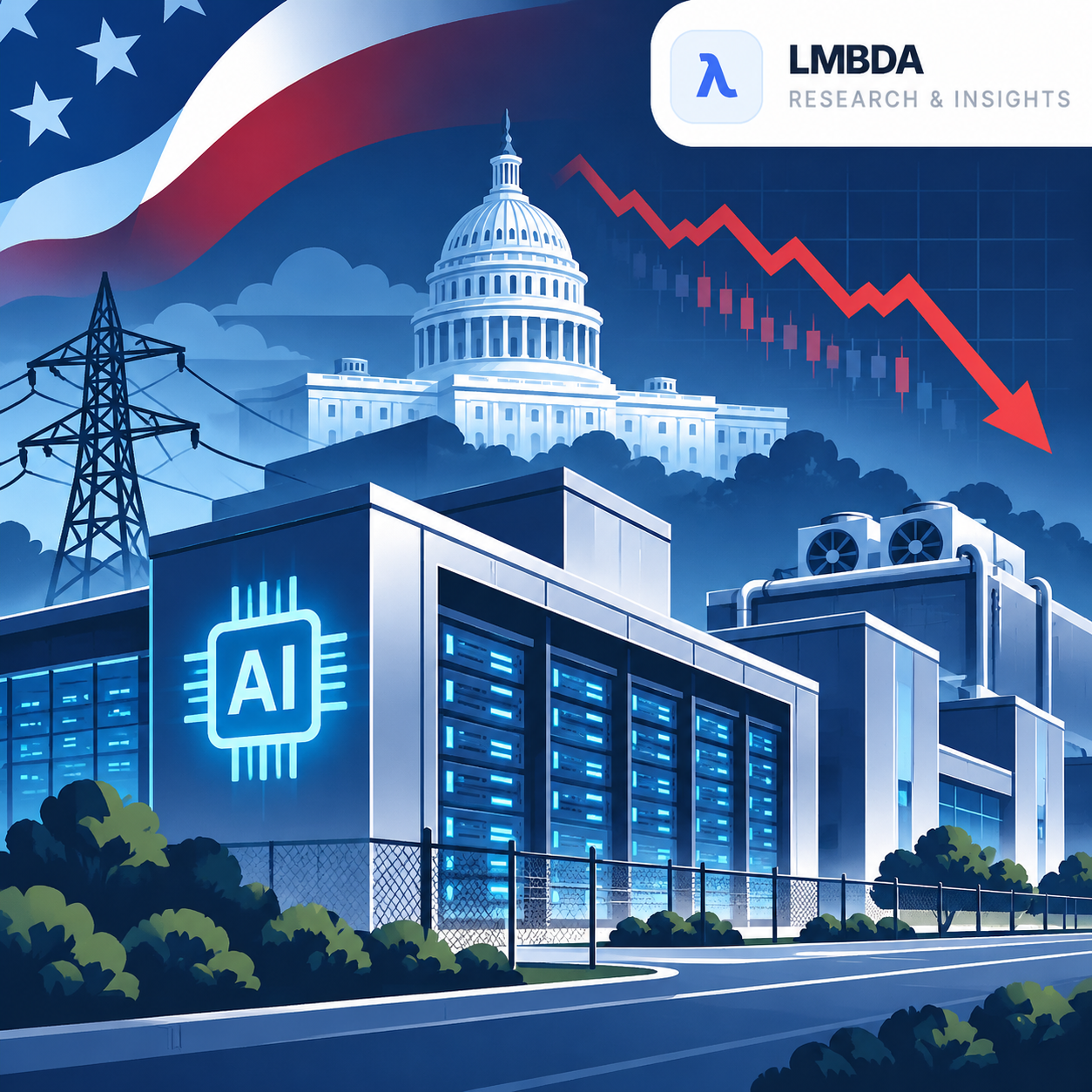
November 8, 2026. Elon Musk's political influence has become an immediate market question for the two publicly traded companies most closely associated with him. After Democrats won control of both chambers of Congress in the November 3 midterm elections, Tesla and SpaceX shares fell while broader US equities recovered. The divergence drew attention because investors were not simply repricing the election result: they were assessing the regulatory, infrastructure and government-contract exposure concentrated across Musk's business portfolio.
The November 4 report from Teslarati described declines in both stocks and connected the reaction to Musk's campaign spending, the change in Texas leadership and the possibility of greater scrutiny from a Democratic-controlled Congress. Reuters independently reported that Tesla and SpaceX shares fell around 4.5% to 5% on Tradegate as global markets recovered, while its November 5 follow-up said losses extended into a second session.
The important distinction is between the market reaction, which is observable, and the political explanations attached to it, which remain investor interpretations. The election did not itself change the companies' products, contracts or permits overnight. It changed the political environment in which those businesses will operate.
The election changed the balance of power in Washington and Texas
Democrats won control of both the US House and Senate in the 2026 midterms. In Texas, Democrat Gina Hinojosa defeated incumbent Greg Abbott in the governor's race, while James Talarico defeated Ken Paxton in the US Senate contest. The results mark a major political shift in a state that has been central to Musk's corporate expansion.
For Musk, the result was also a setback for a substantial political investment. The Associated Press reported that he spent at least $445 million supporting Republicans during the election cycle. A separate New York Times tally cited by other outlets put the figure at approximately $474 million through October 14. These figures use different reporting cutoffs and should not be treated as a final audited total. Reporting also identified roughly $224 million directed toward Texas political efforts.
The political significance is not that campaign donations guarantee a particular regulatory outcome. Rather, the companies now face elected officials who campaigned on closer scrutiny of data centers, corporate tax incentives, utility costs and the relationship between large businesses and public resources.
Tesla: autonomy, incentives and the Texas operating environment
Tesla's exposure is broader than vehicle sales. The company has major operations in Texas, including its Austin Gigafactory, and its future growth plans involve energy storage, autonomous-driving technology and robotaxi services. Each area intersects with different public authorities and regulatory processes.
A Democratic-controlled Congress can increase oversight activity through hearings, document requests and investigations. For Tesla, areas that could attract attention include autonomous-driving safety, federal incentives for manufacturing and energy storage, and the company's relationship with government agencies. This does not mean that new restrictions have already been enacted or that existing approvals have been withdrawn.
Texas may present a more direct near-term policy question. Hinojosa campaigned for a moratorium on new data-center approvals until the legislature could establish stronger protections for residents. Her stated priorities include making operators pay for the electricity and grid infrastructure they require, protecting water supplies, increasing transparency and reconsidering tax incentives.
Those proposals matter to Tesla's wider AI ambitions, but they should not be confused with a direct ban on Tesla vehicle or battery operations. The potential effect depends on which projects require new data-center approvals, how the state implements any moratorium and whether existing facilities or permits are exempt.
SpaceX: public contracts, national security and infrastructure
SpaceX became a publicly traded company in June 2026, following its initial public offering. Its shares trade under the ticker SPCX on the Nasdaq Global Select Market and Nasdaq Texas. The company's own investor-relations FAQ confirms the listing and ticker, making the stock reaction directly observable rather than an estimate based on private-market valuations.
SpaceX has a different risk profile from Tesla. Its business includes launch services, satellite communications through Starlink and growing involvement in AI infrastructure. Government relationships are particularly important: NASA, the Department of Defense and other public agencies are customers and partners across parts of its business.
A Congress controlled by the opposing party can intensify scrutiny of federal contracts, procurement decisions, national-security arrangements and the use of public funds. Oversight does not automatically mean contracts will be canceled. Federal agencies still have operational requirements, existing agreements and procurement rules that do not change simply because congressional control shifts.
Texas also matters. SpaceX's Starbase operations are located in the state, and the incoming administration's approach to land use, infrastructure, environmental permitting and data-center development could influence the broader operating environment. The specific consequences for launch operations will depend on the relevant state and federal authorities, not on data-center policy alone.
Why data centers became part of the Musk market story
The election-related share declines were not limited to Musk's companies. Reuters reported that data-center operators and other businesses tied to the AI infrastructure buildout also came under pressure as investors considered the possibility of tighter regulation and slower project approvals. Some large technology companies moved in the opposite direction as broader markets recovered.
This distinction is important. Investors may be separating companies that consume enormous amounts of capital to build physical infrastructure from companies that sell services or benefit from more disciplined spending. The market reaction does not establish that AI investment is ending. It suggests that the cost, location and regulatory conditions of new capacity are becoming more important to valuations.
Texas is a particularly relevant case. The Texas Tribune reported that Hinojosa called for a moratorium on data-center approvals until lawmakers could put protections in place. Her campaign platform focused on water, electricity costs, public participation, non-disclosure agreements and tax subsidies. She is governor-elect, however; the policy proposals still need to be translated into executive action, legislation and regulatory decisions after she takes office.
What investors may be pricing in
The market reaction can be understood through several overlapping risks:
- Regulatory scrutiny: Democratic control of Congress increases the likelihood of hearings and investigations involving Musk's companies, federal contracts and autonomous systems.
- Permitting uncertainty: Texas proposals for a temporary data-center moratorium could delay some new projects while lawmakers consider long-term rules.
- Government-contract exposure: SpaceX relies on public-sector customers, making procurement oversight and national-security reviews particularly relevant.
- Subsidies and infrastructure costs: Changes to tax incentives or rules requiring large electricity users to fund grid upgrades could alter project economics.
- Political concentration risk: Investors may reassess the benefits and costs of a business strategy closely associated with one political administration or individual.
These are possible channels through which the election could affect future earnings expectations. They are not evidence that every risk will materialize, and they do not explain every movement in either stock. Share prices also respond to company-specific news, interest rates, market positioning, valuation and broader technology-sector sentiment.
The Tesla–SpaceX combination question
Teslarati also raised the possibility that a potential Tesla–SpaceX combination could face slower review in the new political environment. Any transaction involving companies of this scale would raise questions about valuation, governance, competition, national security and regulatory jurisdiction.
However, a political shift does not establish that a merger is planned, agreed or under formal review. Unless the companies disclose a transaction or file the relevant documents, merger-related discussion should be treated as speculation rather than an active regulatory process.
What happens next?
The immediate test will be whether the market reaction develops into concrete changes in policy or company operations. Investors will be watching the incoming Texas administration, the next legislative session, congressional committee priorities and any changes to federal procurement or regulatory oversight.
For Tesla, the key questions concern the pace of autonomy deployment, energy projects and the economics of new infrastructure. For SpaceX, attention is likely to remain on federal contracts, Starlink, launch operations and the company's growing role in AI-related infrastructure. Both companies will also need to demonstrate that their relationships with public institutions can operate under a different political balance.
Conclusion: political risk is now part of the valuation
The post-election declines in Tesla and SpaceX shares do not prove that either company's long-term business model has changed. They do show that investors are assigning greater importance to political and regulatory exposure. Musk's companies operate in sectors where government decisions influence contracts, permits, subsidies, safety oversight and access to infrastructure.
The change in Washington and Texas creates a more demanding environment for those relationships. Whether that translates into slower projects, higher compliance costs or altered investment plans will depend on decisions that have yet to be made.
For investors, the central question is no longer only how quickly Musk's companies can scale. It is how resilient their growth plans are when political access, public resources and regulatory assumptions change.
Frequently asked questions
Why did Tesla and SpaceX shares fall after the 2026 midterms?
Reuters reported that investors were concerned about tighter scrutiny of AI infrastructure, government contracts and Musk's businesses after Democrats won control of Congress. The election was one factor in the market reaction, not proof of a single cause.
Is SpaceX publicly traded?
Yes. SpaceX completed its IPO in June 2026. Its shares began trading on June 12 under the ticker SPCX, according to the company's investor-relations materials.
Who won the 2026 Texas governor's election?
Democrat Gina Hinojosa defeated Greg Abbott and became governor-elect. She campaigned for a temporary moratorium on new data-center approvals while lawmakers develop stronger protections for communities.
Will Texas stop all data-center construction?
That is not yet an enacted statewide policy. Hinojosa has called for a moratorium, but implementation depends on executive action, legislation and the treatment of projects that already have approvals or are under construction.
Could Congress cancel SpaceX government contracts?
Democratic control can increase congressional oversight, but it does not automatically cancel existing contracts. Procurement decisions remain subject to agency requirements, contract terms and applicable law.
Does the stock decline prove that a Tesla–SpaceX merger is being blocked?
No. A possible transaction may attract regulatory scrutiny if formally proposed, but the election-related share decline does not demonstrate that a merger has been agreed or blocked.
Sources
- Teslarati — Musk's Tesla and SpaceX decline after Democratic Midterm sweep (November 4, 2026).
- Reuters — Global markets coverage of the November 4 midterm reaction.
- Reuters — SpaceX, Tesla extend losses as midterm results cloud data center, merger outlook (November 5, 2026).
- SpaceX Investor Relations — FAQs and Contact: IPO date and SPCX listing.
- SpaceX Investor Relations — IPO pricing announcement (June 11, 2026).
- Associated Press — Elon Musk gambled $445 million to boost Republicans in the midterms and came up short (November 2026).
- The Texas Tribune — Gina Hinojosa won the governor's race. What happens to Texas data centers now? (November 4, 2026).
- Gina Hinojosa campaign — Data Centers policy position.