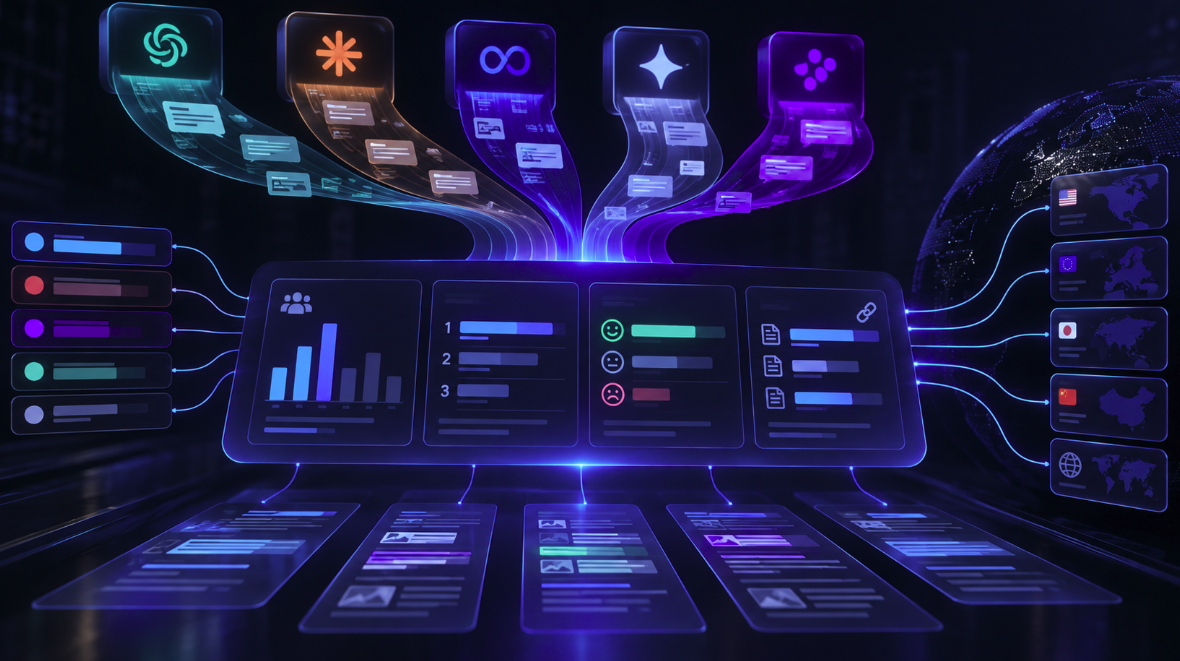
Three of the most widely used generative AI services experienced overlapping disruptions on September 3, turning what would normally be an ordinary platform outage into a warning about how quickly AI has become operational infrastructure. ChatGPT, Claude and Grok all reported or experienced elevated errors during the same broad window, leaving users who had adopted a second chatbot as a backup discovering that switching providers did not necessarily restore their workflow.
The incident was highlighted by NetContentSEO, which framed the simultaneous problems as a reliability issue for AI search. Independent reporting from The Verge, Axios and other outlets also documented overlapping failures. The important caveat is that there is currently no confirmed evidence that the three outages shared a single root cause. Simultaneous failure is not the same thing as common-cause failure.
That distinction actually makes the episode more interesting. Enterprises have spent the last several years debating which model performs best on coding, research, writing or reasoning. As AI systems become embedded in daily operations, another question is becoming equally important: what happens when the model is unavailable at the moment a workflow depends on it?
Three outages, not necessarily one outage
OpenAI's public status service reported elevated errors affecting ChatGPT and Codex on September 3. The company said it had applied a mitigation and was monitoring recovery. Earlier the same day, OpenAI had also resolved a separate incident involving high error rates in ChatGPT Work Mode.
Anthropic was simultaneously dealing with elevated errors affecting multiple Claude models. During the incident, the affected set included versions in its Opus and other model families; later updates indicated that several models had recovered while some Opus versions remained affected. Grok also experienced model problems, with xAI's status infrastructure acknowledging service issues on September 3.
The overlap produced an unusual user experience: attempting to escape one degraded AI platform by opening another could lead directly into a second outage. Reports also appeared around Gemini and other services, although the evidence was less consistent and Google's service should not be grouped into the confirmed failures without the same level of provider acknowledgement.
Several reports raised the possibility that shared cloud or network infrastructure contributed to the pattern. That remains a hypothesis, not an established explanation. Large AI companies use complicated combinations of their own infrastructure, cloud providers, content-delivery networks and external services. Without incident reports from the providers, attributing simultaneous errors to Microsoft Azure, Cloudflare or any other common dependency would be premature.
AI redundancy is harder than choosing two model vendors
For a company building an AI feature, the obvious reliability strategy is multi-provider support. If one model fails, route requests to another. September 3 shows why that idea is necessary but insufficient.
A production AI application is not connected only to a model. It can depend on authentication, vector databases, web retrieval, search APIs, cloud storage, content-delivery networks, observability systems, tool integrations and third-party data. Two nominally independent model providers can therefore still share infrastructure lower in the stack or rely on services that fail in correlated ways.
Models are also not interchangeable APIs in the operational sense. Prompts optimized for one model can behave differently on another. Tool calling schemas vary. Context limits, safety behavior, latency, structured-output reliability and retrieval architectures differ. An emergency switch from one provider to another can therefore keep an application online while subtly changing the quality or meaning of its output.
For high-value workflows, redundancy needs to be tested rather than assumed. Organizations need to know whether their fallback model can actually perform the task, whether credentials and quotas are active, whether tool integrations still work and whether the fallback shares hidden infrastructure with the primary provider.
AI search has a special reliability problem
The reliability question becomes more complicated when a chatbot is also a search and research interface. A conventional web search outage is inconvenient, but the underlying web remains accessible through other engines, direct URLs and browsers. An AI research workflow can combine several operations inside one interface: query interpretation, web retrieval, source selection, synthesis, citation and sometimes actions on external systems.
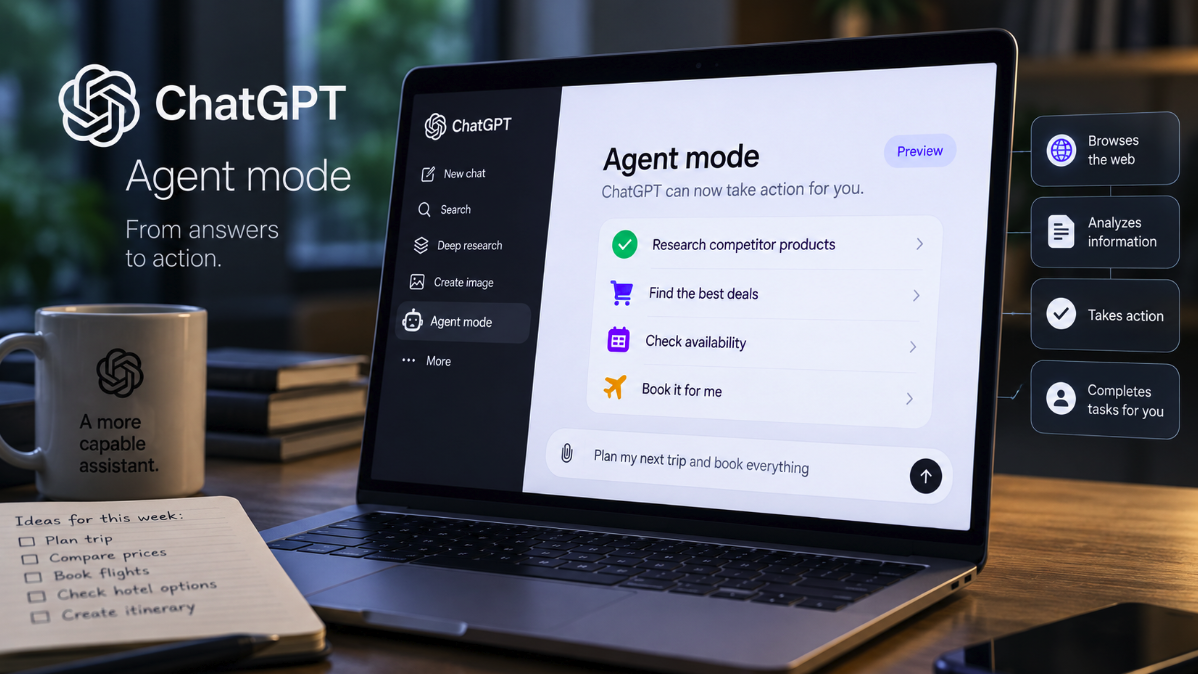
When that interface fails, the user can lose more than a text-generation endpoint. They can lose the workflow that was gathering, filtering and restructuring information for them. This is increasingly relevant as AI products evolve from chatbots into agents that browse websites, manipulate files, execute code and interact with business applications.
The dependency becomes even stronger when organizations stop maintaining a parallel manual process. If customer support staff, developers, analysts or marketers build routines around an AI assistant, the assistant gradually becomes part of the organization's effective software stack even if it was originally purchased as a productivity tool.
That makes uptime a competitive feature. Benchmark scores can influence which model a team pilots, but predictable availability may determine which system an enterprise is willing to place inside a critical workflow.
The fallback may need to be simpler than AI
One lesson from conventional resilience engineering is that a backup should not reproduce every dependency of the primary system. The same principle applies to generative AI.
A company that uses an AI agent to search internal documentation, summarize records and recommend an action might maintain a degraded mode that simply returns conventional search results when the model is unavailable. A coding platform could fall back to documentation search and static analysis. A customer-service system could route users to human agents or deterministic workflows rather than attempting to replace one unavailable frontier model with another equally complex system.
This matters because graceful degradation can be more reliable than perfect substitution. The objective during an outage is not always to preserve every AI capability. It is to preserve the essential business function.
The approach also reduces the temptation to treat AI-generated output as the only interface to underlying information. Search indexes, databases, documents and conventional application controls remain valuable precisely because they provide paths that do not depend on a generative layer being available.
Providers will increasingly compete on incident transparency
Public status pages are becoming an important part of AI infrastructure. They help customers distinguish a local problem from a provider incident and can show whether failures affect a particular model, API or consumer application rather than the entire service.
But status dashboards are only the first layer. Enterprise customers increasingly need post-incident explanations describing root cause, blast radius and prevention measures. OpenAI has previously published technical write-ups for significant incidents, including a September 2025 failure in which misconfigured DDoS protections prevented required web assets from loading for some ChatGPT users. That kind of disclosure helps engineering teams understand whether their own fallback architecture would have survived the same failure.
Model providers may eventually face the same expectations applied to mature cloud platforms: detailed service-level commitments, regional failover options, transparent dependency maps and clearer separation between consumer-product availability and API availability. AI systems are still young enough that outages are often discussed as social-media events. That framing will become less acceptable as the economic cost of downtime rises.
The next AI benchmark may be how well a system fails
There is no evidence yet that the September 3 disruptions were coordinated or caused by one shared technical failure. Treating the timing itself as proof of a common cause would turn an interesting reliability event into speculation. What is confirmed is more useful: several leading AI platforms experienced overlapping service problems, demonstrating that provider diversity alone does not automatically guarantee continuity.
The episode also arrives as companies are moving beyond occasional chatbot use. AI is increasingly embedded in coding environments, search, customer support, research, document processing and agentic workflows. Every step deeper into the workflow increases the cost of unavailability.
That will change procurement. Organizations evaluating AI systems will need to ask about uptime, fallback routing, data portability, dependency concentration and degraded operating modes alongside model quality and price. Developers will need to test what happens when a provider returns errors for an hour rather than designing only for successful responses.
The most resilient AI stack may ultimately be one that knows when not to use AI at all. A second model is useful. A second provider is better. But genuine resilience requires an independent path to the underlying task — one capable of keeping the business functioning when every impressive model on the benchmark chart happens to be unavailable at the same time.